At a glance
The festival's sanctuary, by the numbers
The work
What we built
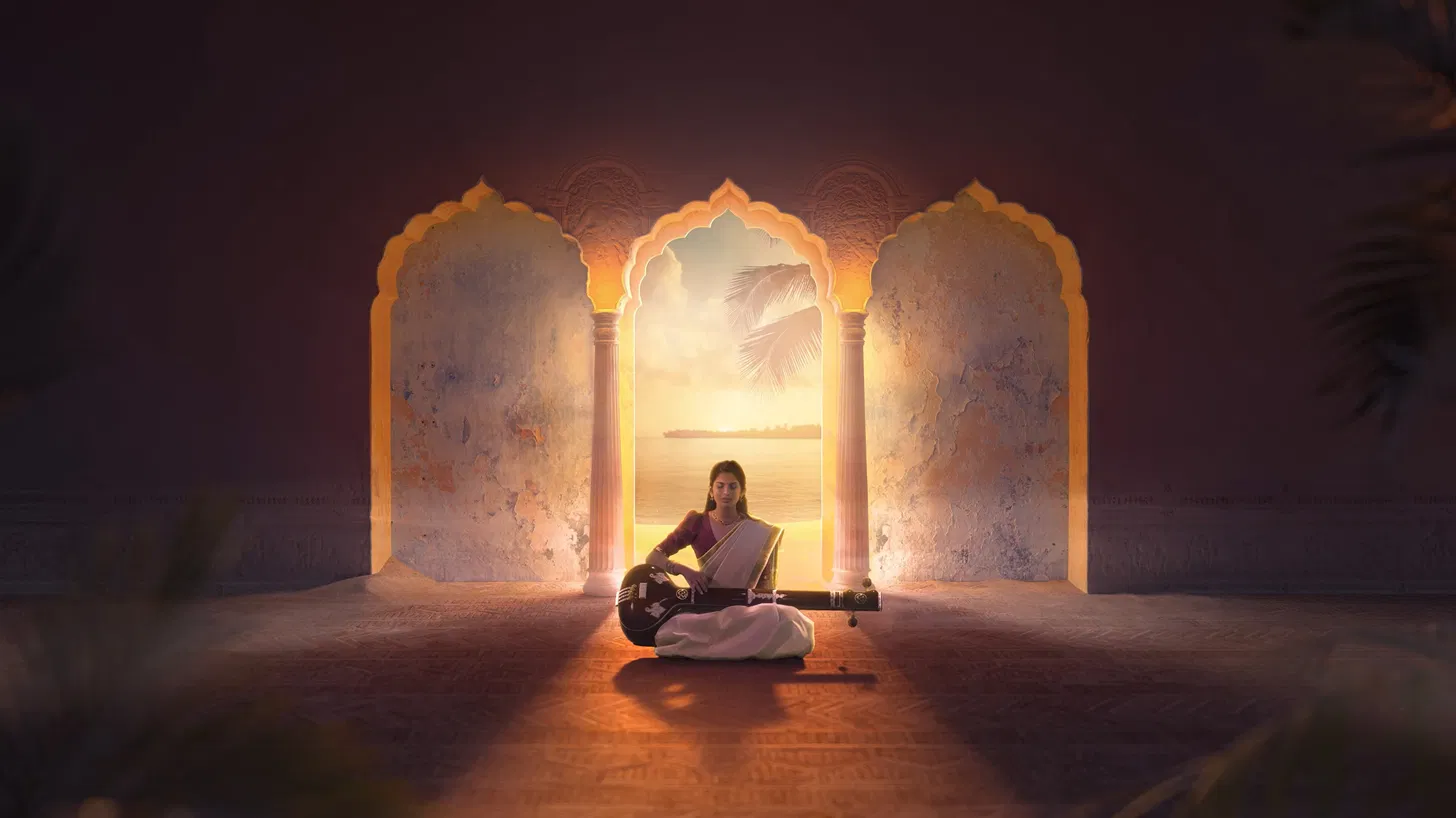
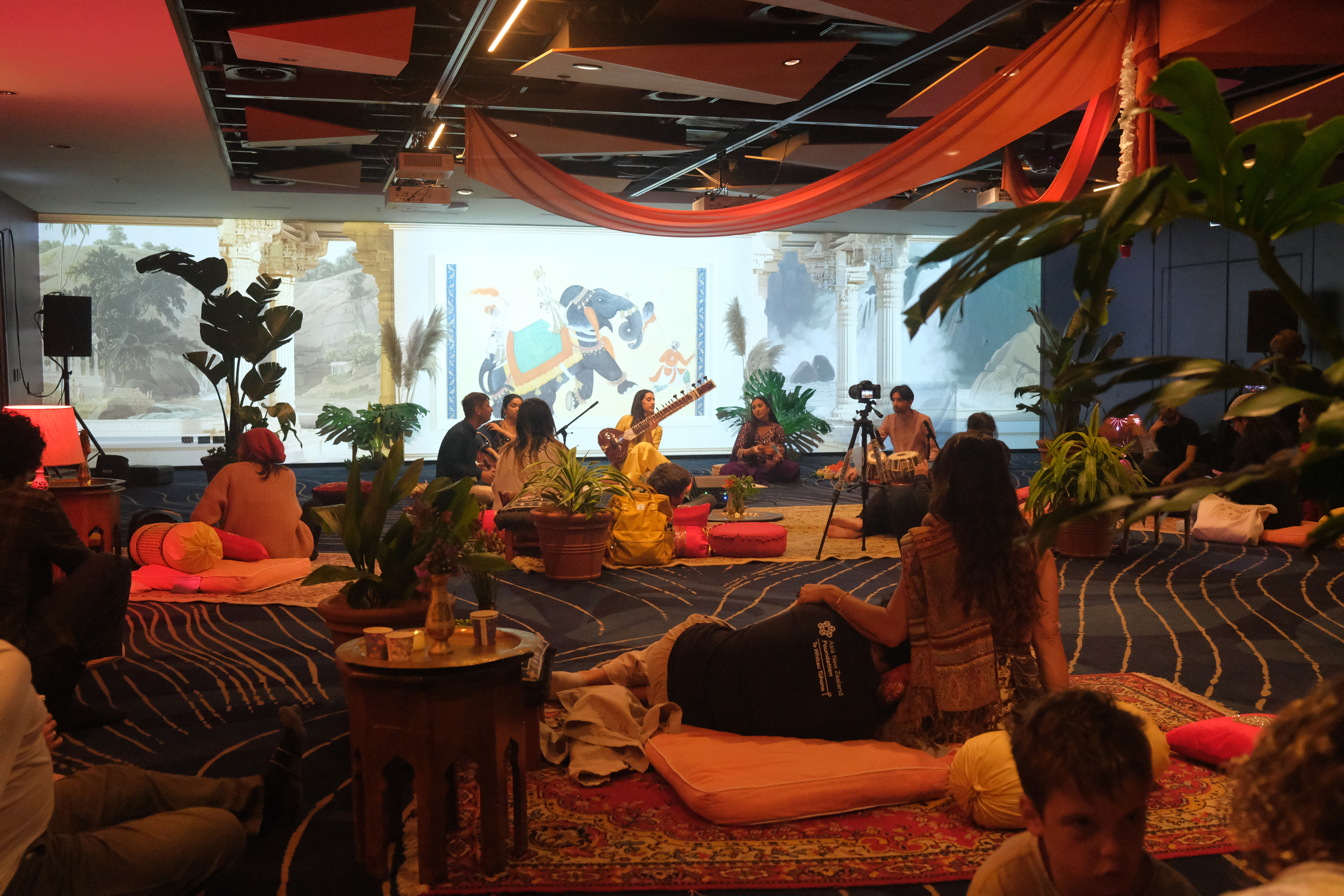
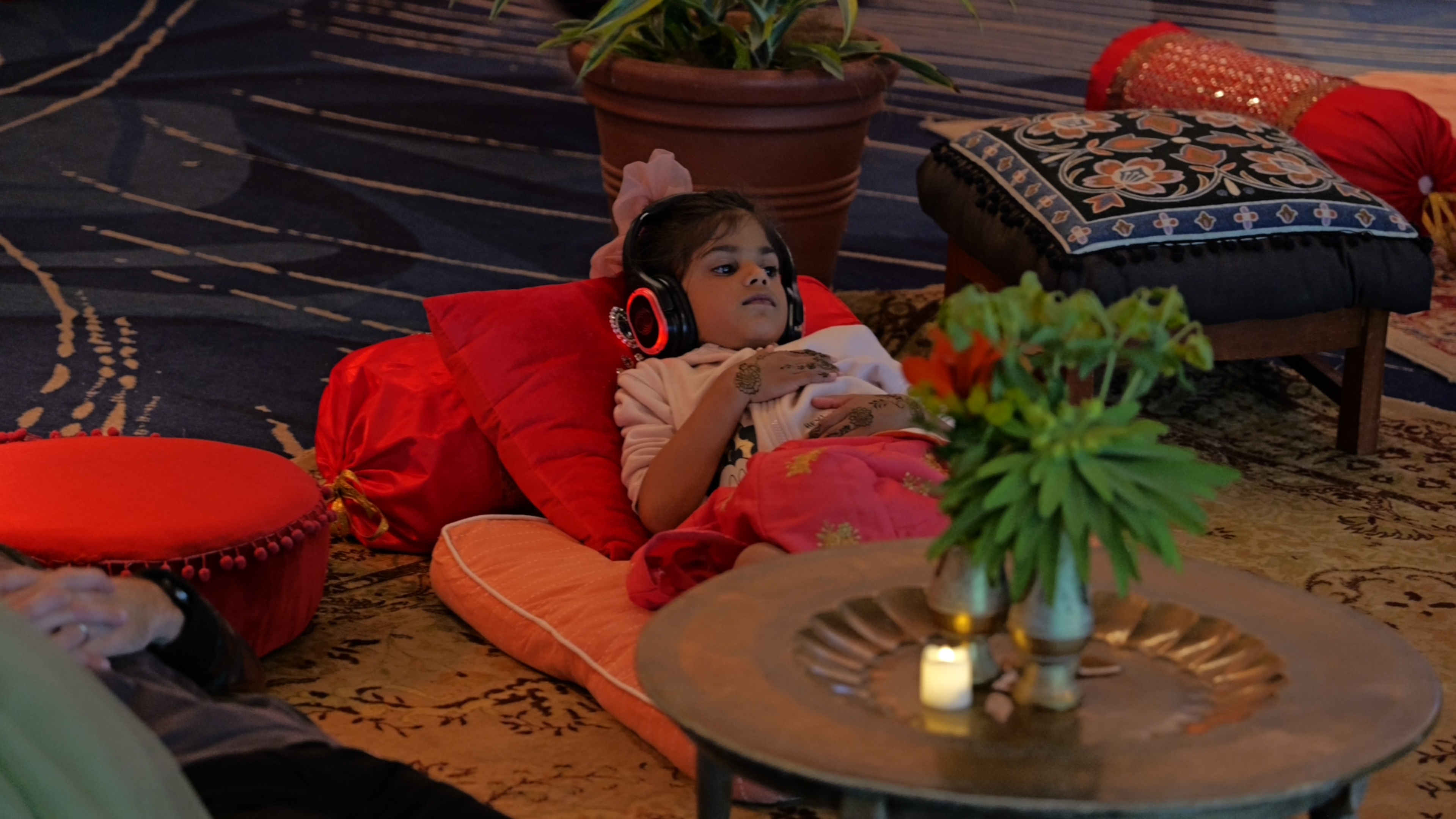
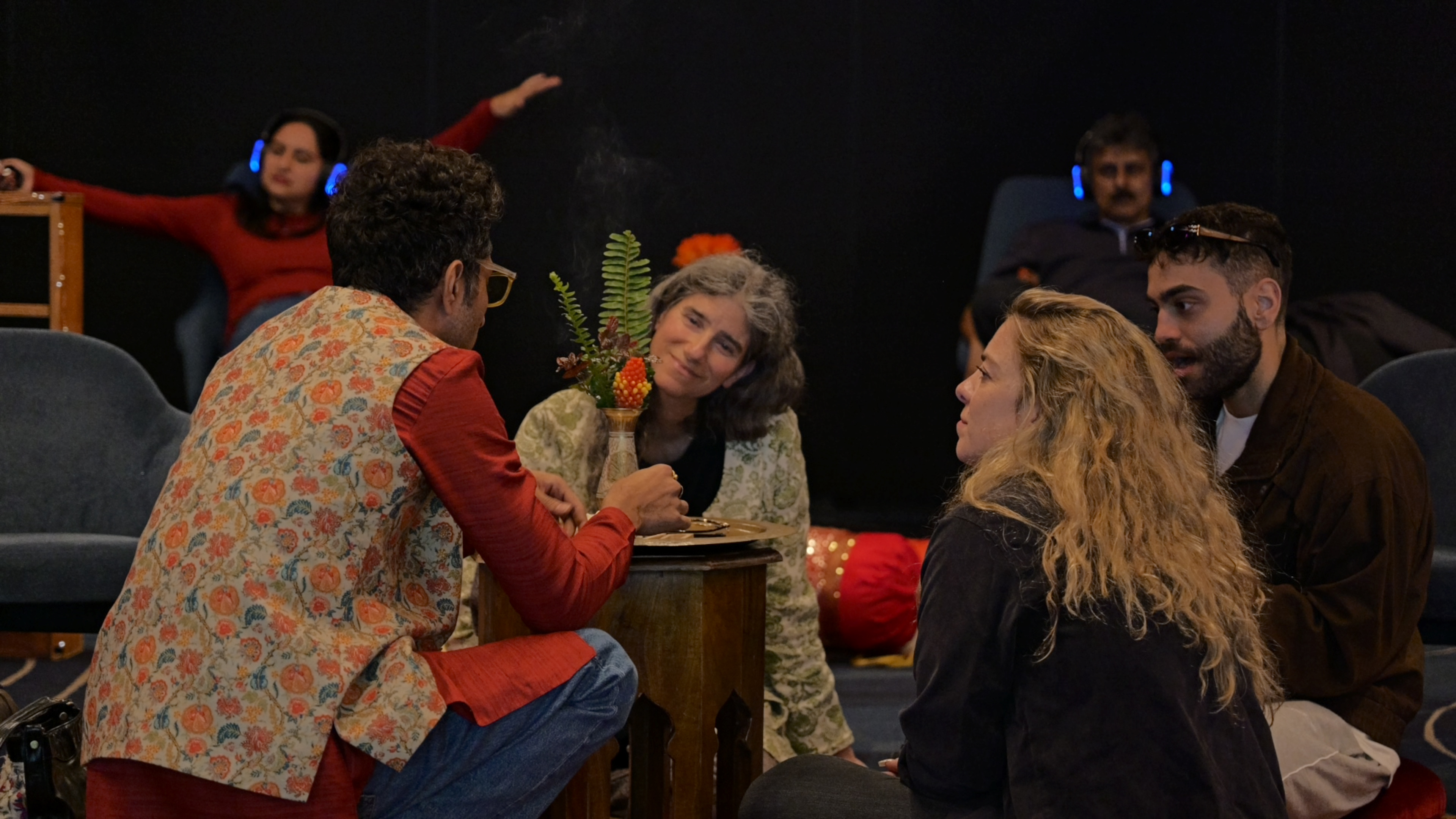
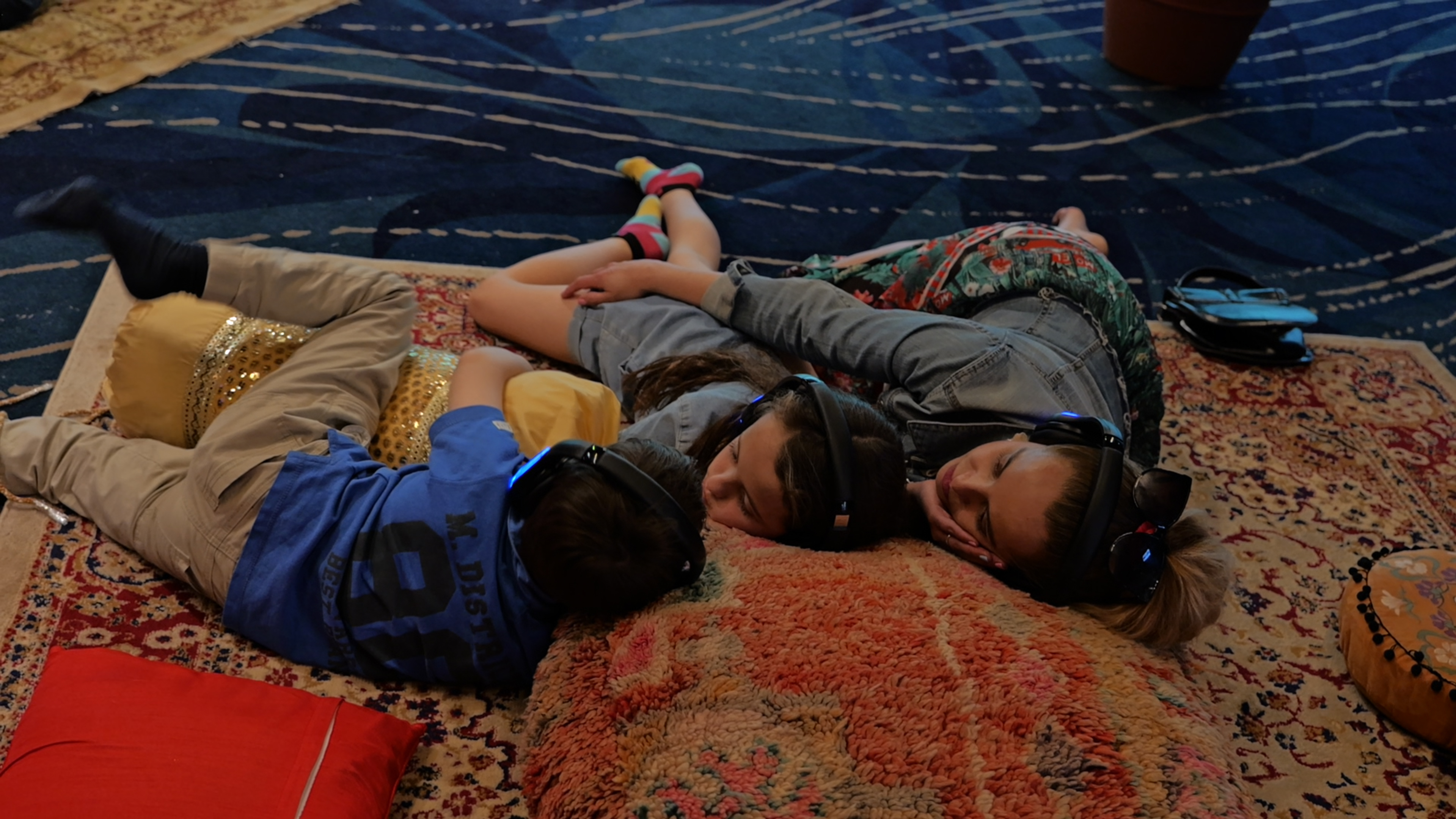
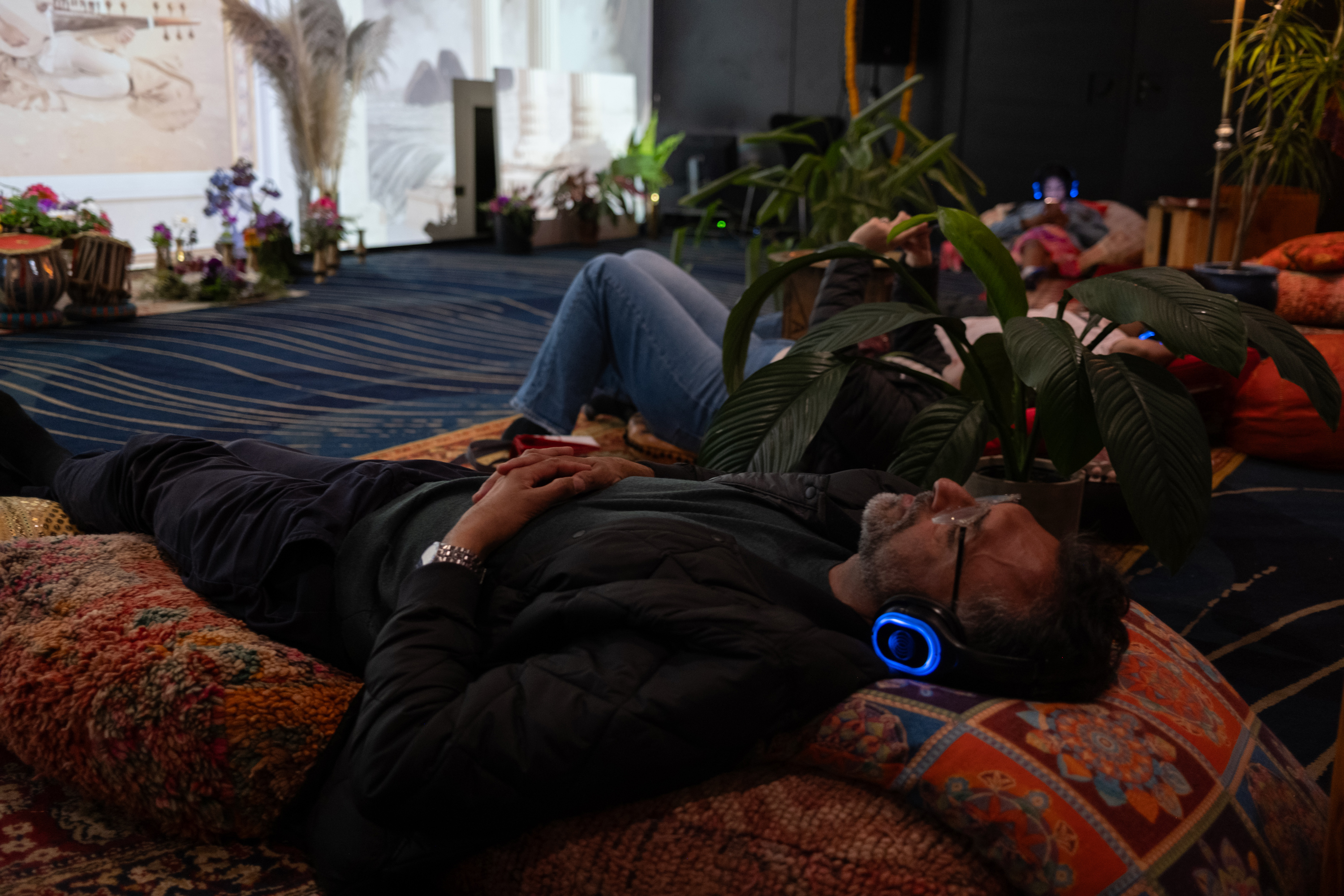
Created by Sounds of a Sphere, the Living Arts Space transformed the Aotea Centre's Waitākere rooms into a tranquil courtyard café: lavish floor seating, layered decor, ambient scent and 10metre projected scenery evoking ancient vernacular scenes of India. Four Living Paintings works screened on rotation, paired with Indian classical music delivered through silent-disco headphones and a live performance.
Reach
Demand outran capacity
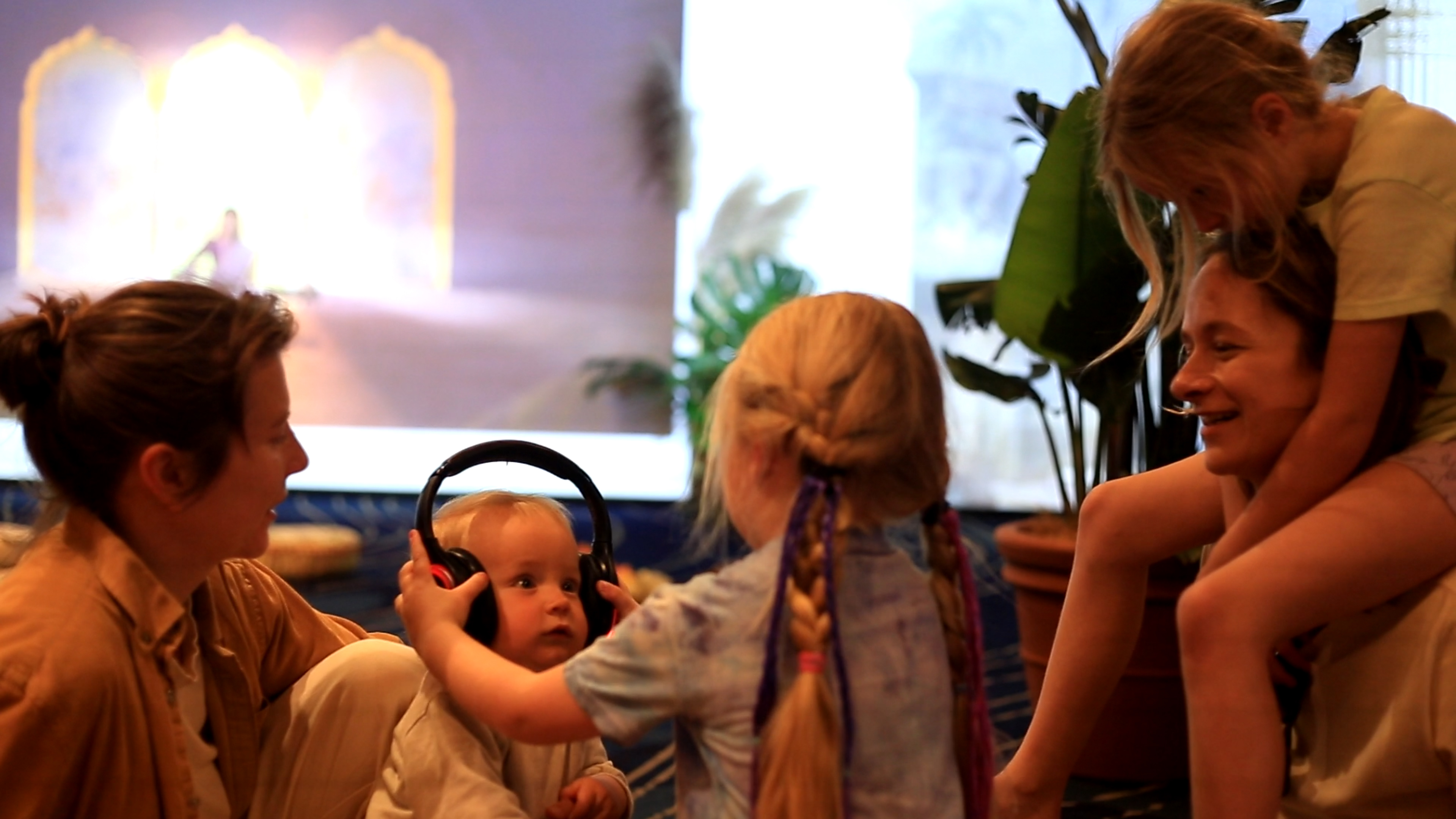
From 4pm to 7.30pm on both the Saturday and the Sunday of each festival, all 20 headphones were continuously in use, with guests routinely queuing for returns. At an average 10-minute listen, that is a throughput of up to 120 listeners per hour, roughly 840 headphone sessions across peak hours alone each weekend.
750 turmeric lattes were served to guests entering the room over each two-day festival, setting a confirmed floor of 750 visitors per event. Many guests declined a beverage, so total visits are estimated at 1,000-1,200 or more over the weekend.
Stays ranged from five minutes to a full hour. For a free, un-ticketed room at a high-stimulation festival, that dwell time is the clearest signal the space did its job.
Live performance
The Basant Ensemble
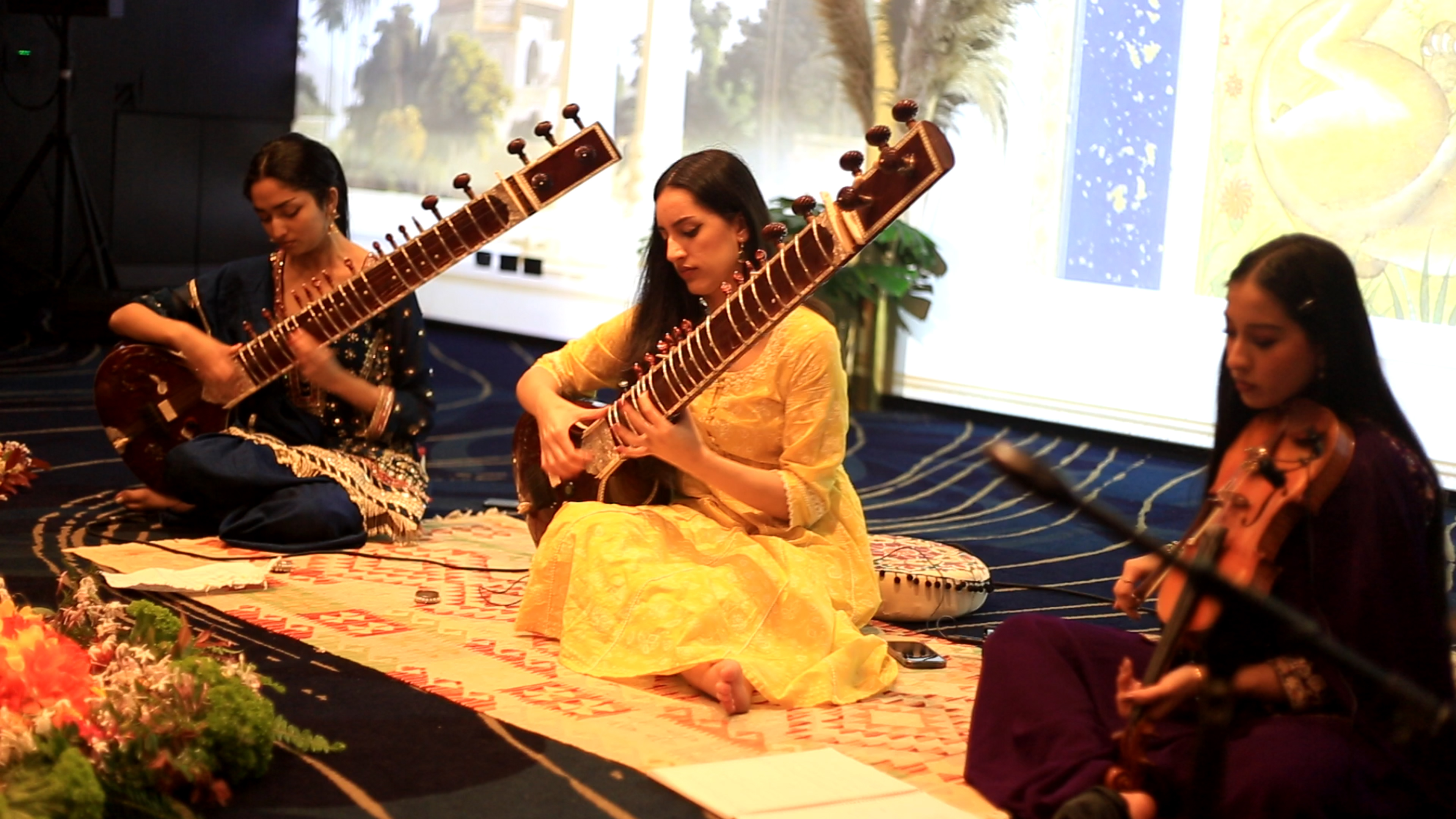
A five-piece ensemble performed live within the space at 2pm, with attendance numbers estimated around 50-60.
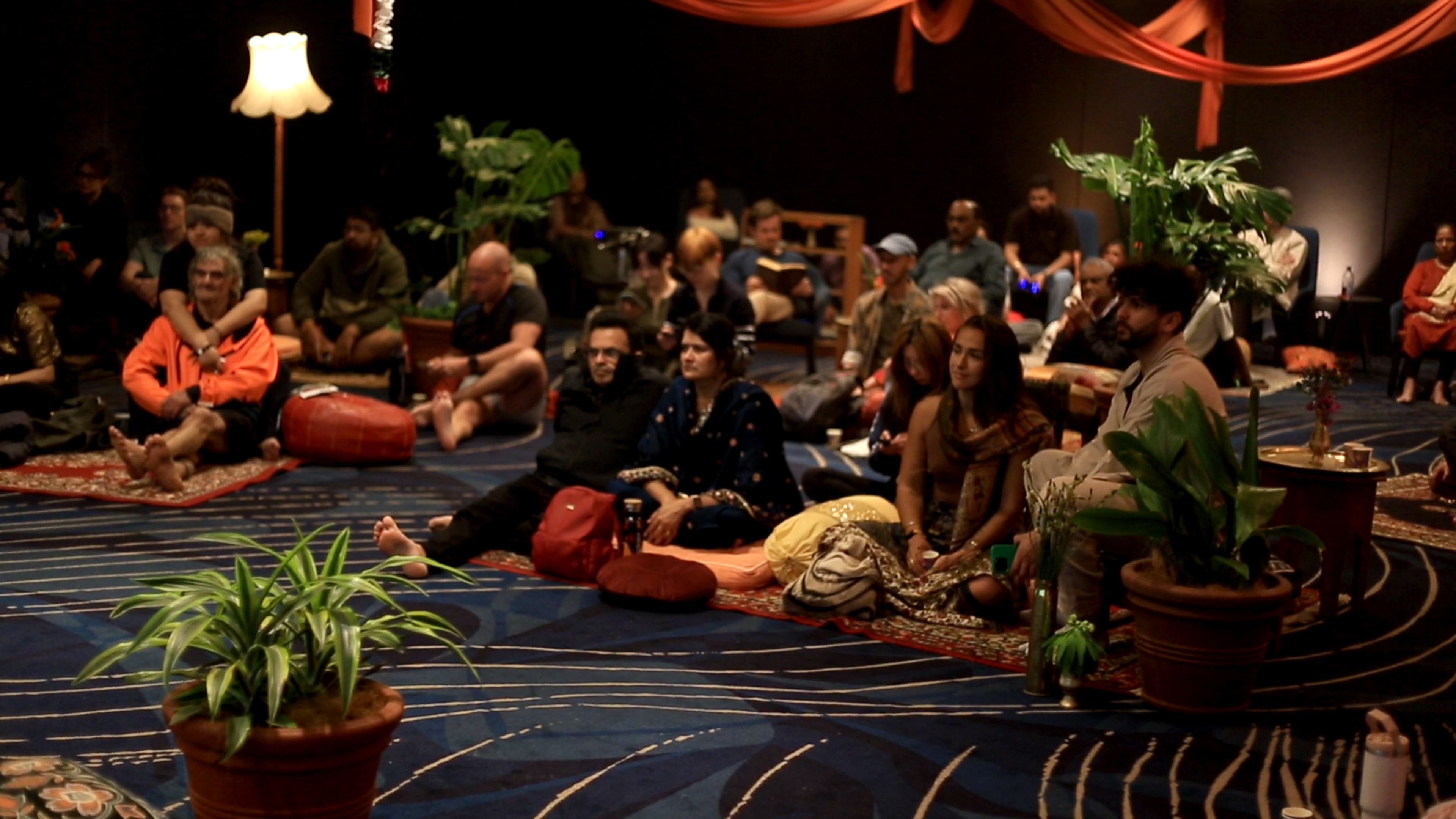
Based on the seating inventory installed for the event (66 rented cushions, poufs, stools and chairs) plus additional sitting space without cushions, the space can comfortably host 80-100 guests. We would love to explore the option of hosting more performances inside the Living Arts Space. Coupling the decor and the 10metre panoramic projection with the performance, the potential is here for making an unforgettable impression on attendees. In future we feel performances will benefit from increased advertising ahead of the weekend.
Audience response
What guests told us
Across both years, feedback converged on four themes: the room was a sanctuary, a rest-and-recharge zone inside a busy festival; it was transportive, with guests repeatedly saying they felt as if they had stepped into India, an experience they had not found elsewhere in Aotearoa; its aesthetic quality was remarked on constantly, from scenography and decor to projection; and it opened Indian classical music to first-time listeners, from toddlers to people of various cultures. Several guests asked for a permanent version in the city.
We collected feedback from 28 people in total. Here is a selection from people who took the most time to share their thoughts.
"Indian classical music is my passion. It is not my wife's. For years I tried to show her how good it is. But she doesn't like it. Today she tells me for the first time, 'I understand now'. Thank you. Thank you so much."
Puneet Bafna · Engineer
★This guest returned the following day with a gift-wrapped box of sweets as a token of appreciation, and insisted on coming back on the Sunday to help with pack-down.
"It felt like going to church. A safe space to retreat and recalibrate. I don't know why we don't always have these places available in the city. I work on Albert St and I would love to go here on my work breaks! You should make a permanent one!"
"Orest [her toddler] was very peaceful. He's always on the move, but he's been sitting here with the headphones on for fifteen minutes."
Livija Pujena, 33 · Occupational therapist, mother
"From the time I entered, I was transported to a completely different zone. I felt like I was in India. That was a rare experience to have, as I haven't seen spaces like these before in Aotearoa. I love Indian classical music, and having the opportunity to listen to it within this lounge made the experience exceptional. The atmosphere reminded me of a 'Baithak' or 'Mehfil' style evening, settings that allow the music to be received in a relaxed way. I could spend hours in there! I would definitely be keen to return."
Sanya Minocha, 32 · Healing practitioner
"The Living Arts Space brought to life ancient vernacular scenes of India, offering a potent cultural context for music and art that might otherwise feel inaccessible across both distance and time. Through imaginative scenography, layered decor, projected artwork, and live performance, the space evoked the atmosphere of old courtyard ragas, regal gatherings, temple evenings, and intimate mehfils. The live tablas, singing, and ragas did not simply accompany the visuals; they animated them. It felt less like watching a performance and more like entering a cultural dream-space, one where ancient stories, sounds, and textures were made immediate, embodied, and alive."
Chirag Jindal, 30 · Business owner, ARCLAB
"Honestly, it's the first time we've ever seen our toddler stay still. He was transfixed. Me and my wife enjoyed all four visual pieces. 'Darbar' was our favourite. I don't know anything about Indian music, but I found this really relaxing and enjoyable. I enjoyed it even more so seeing my son with the headphones on, listening and smiling."
Anton Kowalski, 36 · Business owner, Float Culture
Media
In the press
The Living Arts Space was featured in an interview with Radio New Zealand.
Watch the RNZ interview →Gallery
The space
.webp)
.webp)
Recap
Living Arts Space 2024 Recap
Watch on youtube →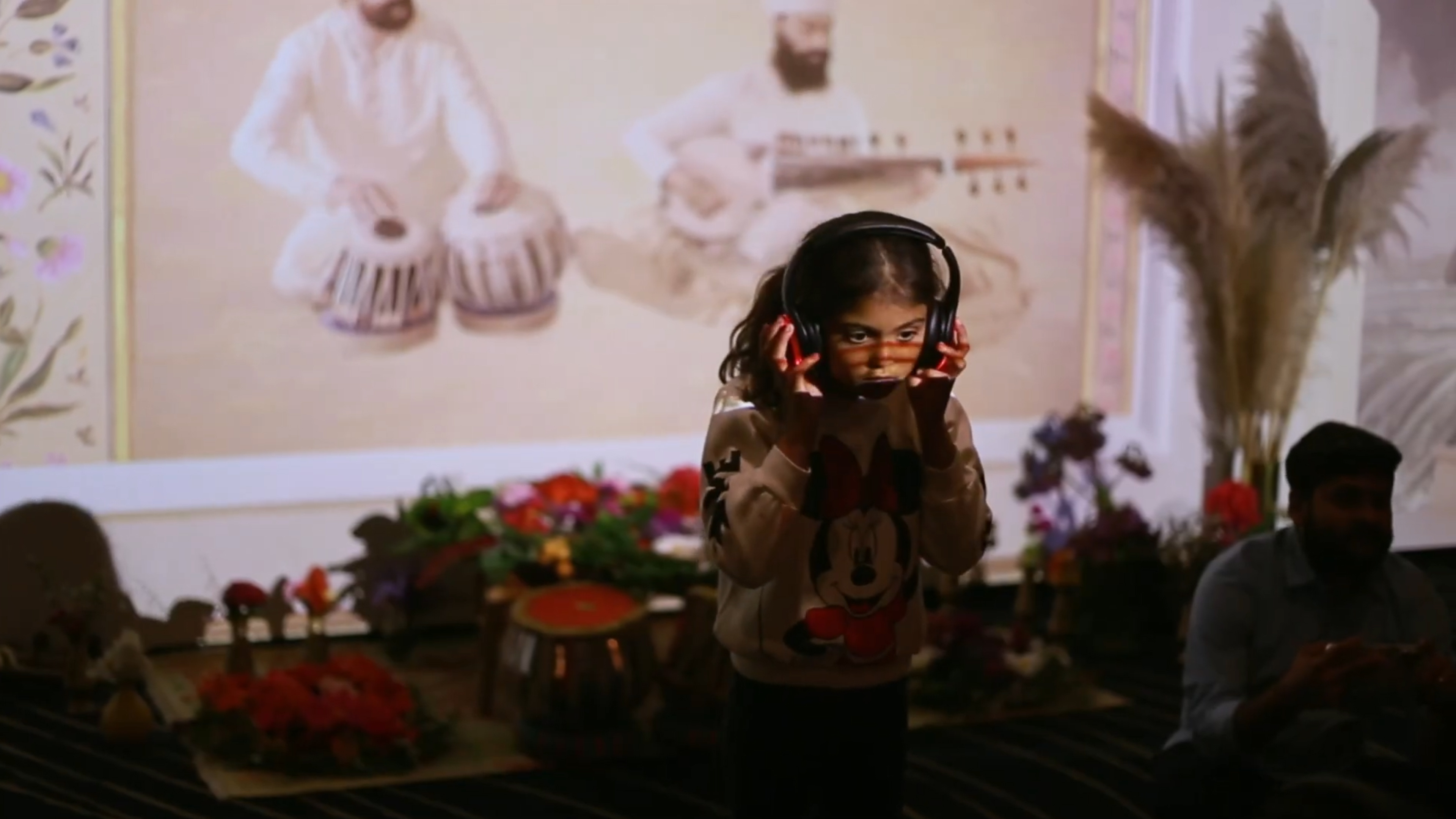
Value for investment
Impact per dollar
- $7,800 total delivery cost per festival, on a fixed quote, covering full room transformation, audio-visual production, hosting, beverages and live performance support. This fee excludes Aotea projector hire.
- $6.50-$7.80 per visit at an estimated 1,000-1,200 visits per weekend.
- Free at the point of entry for every festival-goer. A comparable ticketed art exhibition experience would typically be priced around $15; with the Basant Ensemble's live performance, decor and projections combined, the full experience would be closer to $40-50.
- Lean production: a two-host operation with rented, reusable decor, delivered in full and on budget across both years.
Looking ahead
2026: Untapped Reach
Discoverability, not demand, was the ceiling
The space's biggest limitation in 2024 was signage. Wayfinding improved in 2025, yet guests still told us they were surprised to discover the room at all. With modest investment in signage and promotion, both ahead of the festival and throughout the weekend, reach could grow well beyond current numbers at very little additional cost.
We also believe that since it is such a unique space, additional performances in the Living Arts Space will make an unforgettable impression on attendees.